The Ultimate Guide to Aquarium Protein Skimmer in the UK
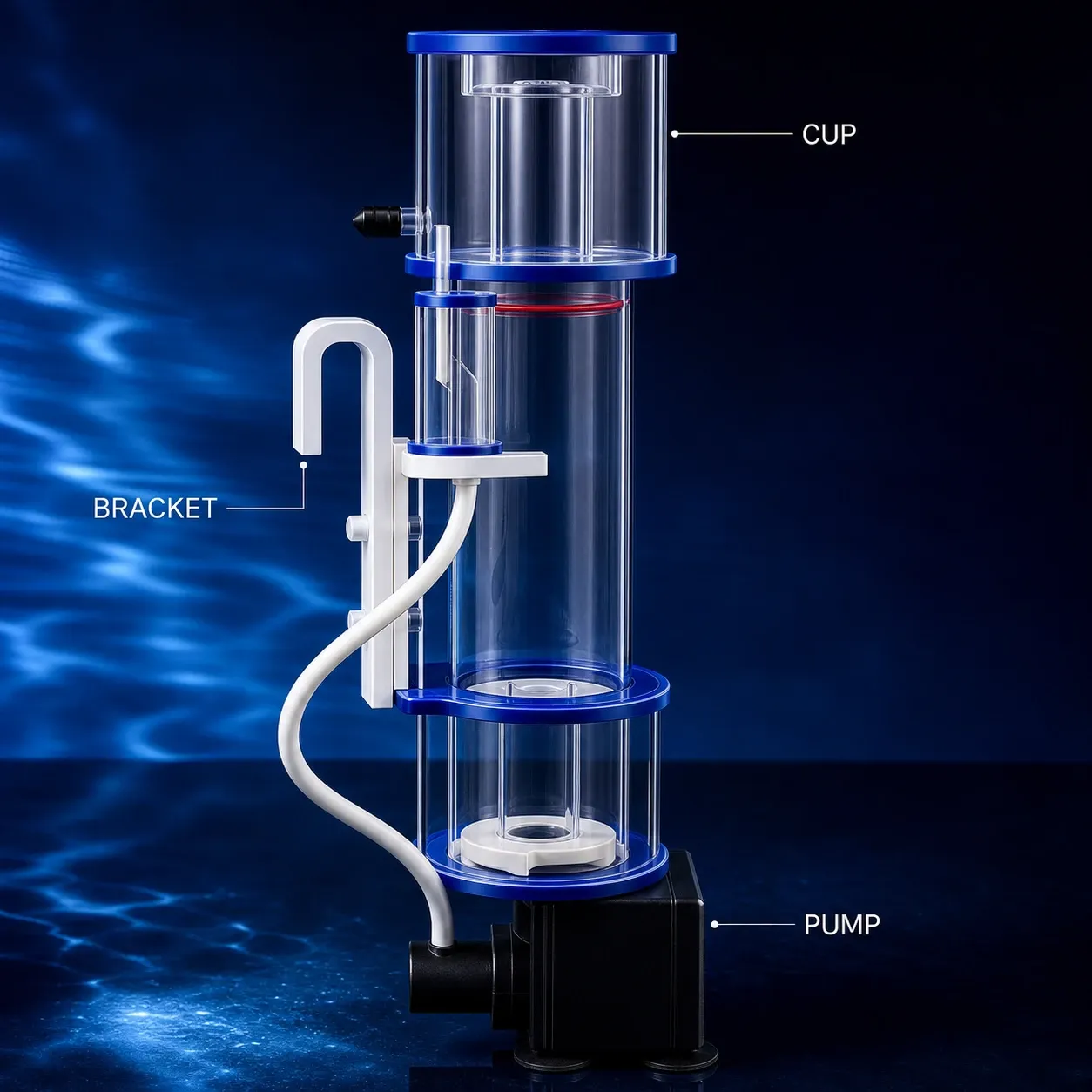
Short answer: an aquarium protein skimmer, also called a foam fractionator, removes dissolved organic compounds from the water using fine bubbles, and it works mainly in marine (saltwater) tanks. It is a different tool from a surface skimmer, which clears the oily film off the top. The AquarSurfa Pro Clear is a surface skimmer, not a protein skimmer, and it does not replace one.
Searching for an aquarium skimmer throws up protein skimmers, filter intakes and surface skimmers all at once, which makes a like-for-like comparison hard. This guide untangles the two, so you can decide what a 100 to 150 litre tank actually needs before you buy once.
Protein skimmer or surface skimmer: which do you need?
- A protein skimmer removes dissolved organic compounds through foam fractionation, mostly in marine tanks.
- A surface skimmer clears the oily film off the water surface and improves oxygen exchange, in fresh or salt water.
- In freshwater, protein skimmers are largely ineffective because the water will not hold the fine foam.
- They are complementary, not interchangeable; a surface skimmer does not replace a protein skimmer.
What is an aquarium protein skimmer?
A protein skimmer, or foam fractionator, pushes a column of very fine bubbles through the water. Dissolved organic compounds, from fish waste, uneaten food and other sources, are attracted to the surface of those bubbles and are carried up into a collection cup as foam, where you can pour them away. The benefit is that it removes this waste before it breaks down into ammonia and nitrite, which reduces the load on your biological filter and keeps the water clearer.
Why protein skimmers are mainly a marine tool
The reason comes down to physics. Salt water has a higher surface tension than freshwater, so it forms the huge number of small, stable bubbles a skimmer needs to carry waste up into the cup. In freshwater the bubbles pop before they can lift the waste, so a standard saltwater protein skimmer is largely ineffective on a typical freshwater tank; there, regular water changes are the main way to remove dissolved organics. If you keep a marine or reef tank, a protein skimmer is a core piece of kit; if you keep freshwater, it usually is not.
Protein skimmer versus surface skimmer: the confusion
This is where the two names cause trouble. They sound similar and both say "skimmer", but they do different jobs.
- Protein skimmer (foam fractionator): removes dissolved organic compounds from the whole water column; needs salt water to work well; usually sits in a sump or hangs on the back.
- Surface skimmer: removes the oily film from the very top and improves gas exchange; works in fresh and salt water; mounts inside the tank on the glass.
So if your problem is a greasy film and a dull surface, the tool you want is a surface skimmer. For sizing one to a tank, see our 100 litre aquarium skimmer and 150 litre aquarium skimmer guides.
Do you need a surface skimmer for a nano reef?
Many small marine keepers ask whether they need a surface skimmer for a nano reef, especially where there is no room for a sump or a large protein skimmer. A surface film still forms on a reef tank, dulling the look under blue light and slowing gas exchange, and a compact surface skimmer that mounts on the glass clears it. Because it has a corrosion-resistant stainless-steel shaft, it copes with salt, and it works alongside a protein skimmer rather than instead of one, handling the surface while the skimmer handles dissolved organics.
Where the AquarSurfa surface skimmer fits
To be clear about what you are buying: the AquarSurfa Pro Clear is a surface skimmer. As our product FAQ states, it does not replace an aquarium protein skimmer that marine keepers use to remove dissolved organic compounds; it is a complementary upgrade for surface clarity and oxygen exchange. On a 100 to 150 litre freshwater tank it is the right tool on its own; on a small marine tank it sits happily alongside a protein skimmer. If you want to tune how gently it runs, our adjustable aquarium skimmer guide explains the method.
Where the AquarSurfa surface skimmer fits alongside a protein skimmer
If a surface film is your problem, the AquarSurfa Pro Clear surface skimmer handles it in 100 to 150 litre freshwater and marine tanks, working alongside a protein skimmer rather than replacing one. It uses a floating comb that self-adjusts to the water level on a 3-level height bracket, an adjustable flow dial so you can start gently, and a built-in air-intake silencer to cut gurgling. A corrosion-resistant stainless-steel shaft suits both fresh and salt water, heavy-duty suction cups hold it steady on the glass, and it comes with an internal sponge, needle cleaning brushes and a 1.5m cable. It is £75.90 inc. VAT (£63.25 ex. VAT), ships from UK stock with free next-day dispatch, and comes with a 12-month UK warranty and 30-day returns. It is rated 4.7 out of 5 from 341 reviews. Check the floating comb weekly and rinse the sponge every couple of weeks in old tank water; replacement sponges are available.
Clear the surface film in fresh or salt water
View the AquarSurfa Pro Clear — £75.90Frequently asked questions
What does an aquarium protein skimmer do?
A protein skimmer, or foam fractionator, pushes fine bubbles through the water so dissolved organic compounds from waste and uneaten food stick to them and are carried up into a collection cup. It removes that waste before it breaks down into ammonia and nitrite, easing the load on your biological filter.
Do protein skimmers work in freshwater aquariums?
Not really. Salt water has the higher surface tension needed to form the stable fine foam a skimmer relies on, so in freshwater the bubbles pop before they can carry waste away. On freshwater tanks, regular water changes are the main way to remove dissolved organics.
Will a surface skimmer replace a protein skimmer?
No. A surface skimmer clears the oily film off the top and improves oxygen exchange, while a protein skimmer removes dissolved organic compounds from the whole water column in a marine tank. They are complementary, so a surface skimmer is a supplement to a protein skimmer, not a substitute.
Do I need a surface skimmer for a nano reef?
It helps. A surface film forms on reef tanks too, dulling the view under blue light and slowing gas exchange, and a compact surface skimmer that mounts on the glass clears it where there is no room for extra kit. With a corrosion-resistant stainless-steel shaft it copes with salt water and works alongside your protein skimmer.
Ready to try AquarSurfa for crystal clear water?
Upgrade Your Tank — £75.90