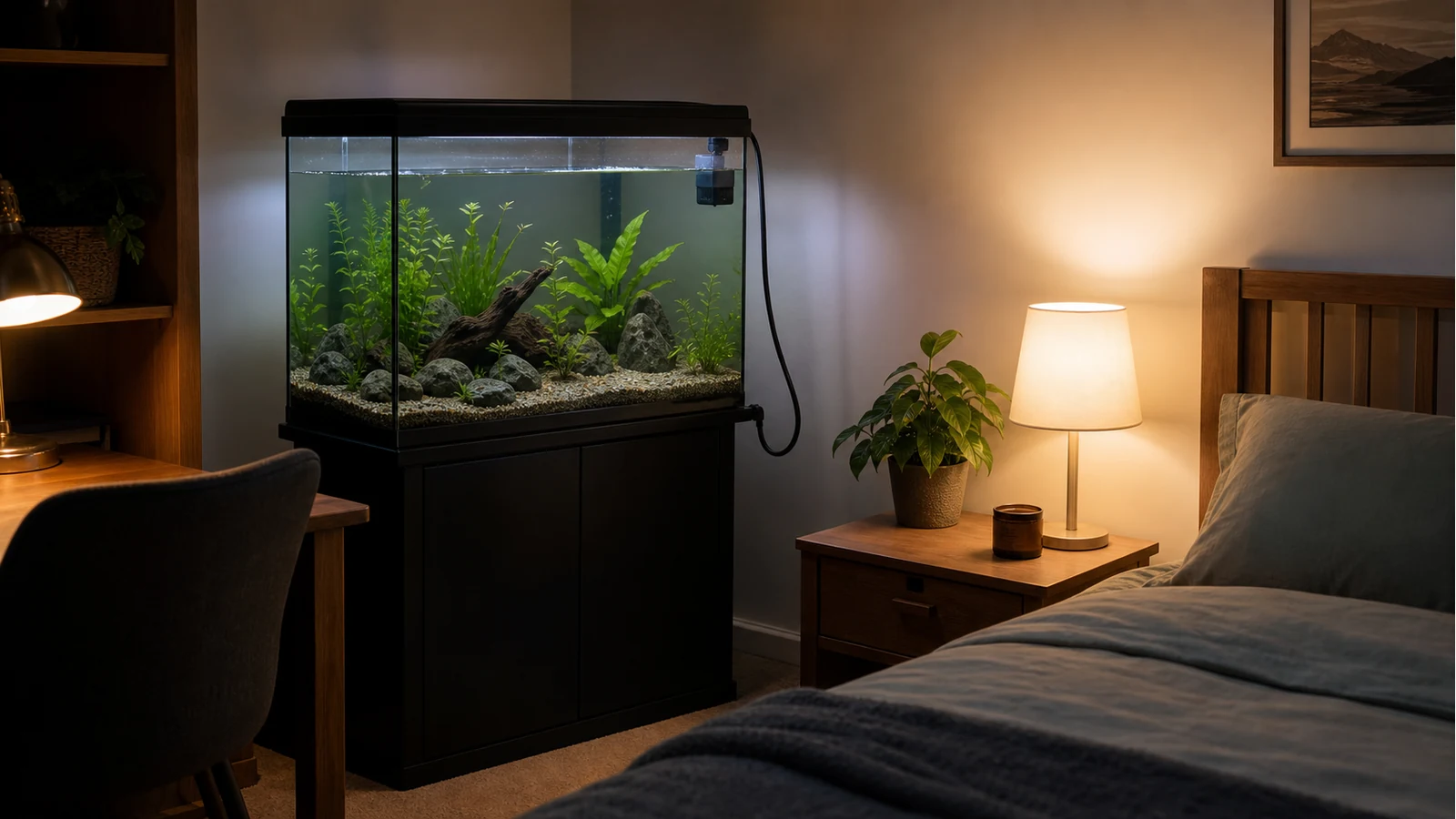
Quiet Aquarium Surface Skimmer For Bedroom
Direct answer: a bedroom surface skimmer is worth considering only if it can clear the surface without adding a new night-time sound. The noise test is practical, not poetic: stable water level, intake not sucking air, modest flow, no vibration against glass, cable routed safely, and a full night of listening from the bed or desk position.
Most bedroom complaints come from avoidable setup details. A raised filter outlet can break surface film but create waterfall noise. A floating intake set too high can gulp air as water evaporates. A loose body can buzz on the glass. A pump with a cable stretched across the room can create both a trip risk and an electrical worry. The right question is not "is it silent?" but "can I tune it to be quiet enough in my exact room?"
Why surface skimmers get noisy
Gurgling usually means air is being pulled into the intake. That can happen when the water level falls, the comb sits too high, the flow is too strong for the waterline, or debris partly blocks the path. Buzzing is more often contact noise: the unit touches glass, a suction cup has shifted, or the cable transmits vibration to the cabinet. Splashing usually means the outlet or surface movement is too aggressive for a bedroom tank.
For a 100-150 litre tank, an adjustable unit gives you more ways to solve these causes. The supplied AquarSurfa facts mention an air-intake silencer, heavy-duty suction cups, a three-level bracket and a top flow dial. Those are useful features only if you actually test them. No article can promise a decibel result in your flat because cabinet resonance, water level and room acoustics change the outcome.
Bedroom trial checklist
- Measure cable reach before filling the plan. The route should reach a suitable socket without tension, dangling loops across a walkway or extension clutter near water.
- Create a drip loop. Keep the cable lower than the socket before it rises to the plug, so stray water does not run toward the outlet.
- Install low and start low. Set the comb and flow so the unit moves the surface without gulping air.
- Mark the normal waterline. Check again the next evening. Evaporation can turn a quiet setup into a gurgling one.
- Listen at the real distance. Stand beside the tank, then sit at the desk, then lie in bed. A sound that is acceptable at noon may be irritating at midnight.
- Run a full night before deciding. A ten-minute daytime test misses the quiet-room problem.
- Clean once during the trial. A unit that is quiet only when spotless may not suit a low-maintenance bedroom.
Keep the test ordinary. Do not use headphones, white-noise apps or a noisy fan to make the result feel better. Note whether the sound is steady, intermittent, or linked to evaporation after several hours. Intermittent gulping is often more annoying than a low constant hum because it pulls attention during sleep or video calls. If the tank is in a home office, make one short call with the microphone in its normal place and listen back before deciding.
Electrical checks in a wet room corner
Aquariums put powered equipment near water, so the boring checks matter. The HSE advice on checking electrical equipment recommends checking that electrical equipment is suitable, in good condition and appropriate for the supply, and notes RCD protection as a useful secondary safety measure. The HSE electrical safety overview also stresses stopping use if plugs, connectors or cables are damaged. In plain fishkeeping terms: no cracked plug, no taped cable, no overloaded adaptor behind a cabinet, no socket where splash or condensation is likely.
Renters should also think reversibility. A suction-cup installation is attractive because it avoids drilling, pipework and permanent cabinet changes. But suction cups still need clean glass, enough flat space and a position you can reach for maintenance. If you have to move the whole aquascape each time you rinse a sponge, the setup is not bedroom-friendly.
Who should not buy this style of upgrade
Do not buy a separate surface skimmer if the noise is coming from a failing main filter, a rattling cabinet, an exposed waterfall outlet or an overfilled extension lead area. Do not buy if the tank sits so close to the bed that any motor hum will bother you. Do not buy if you cannot keep the waterline stable enough to stop air being drawn in. If your main goal is absolute silence, a non-powered husbandry change may beat another device.
Stop conditions
Stop the trial immediately if the plug or cable is damaged, the unit trips an RCD repeatedly, water can reach the socket, the skimmer traps livestock, or the pump becomes louder after cleaning. Stop and reassess if fish begin gasping or behaving abnormally; surface-film equipment is not a substitute for water-quality checks.
Conditional next step
If your tank is 100-150 litres, the waterline is stable, you need a removable no-drill installation and the surface film remains after gentler outlet adjustments, the AquarSurfa product route is a reasonable page to review. Keep the next step soft: use the retailer's UK return information and your baseline rights under GOV.UK guidance on online returns to run a real bedroom trial, not a hopeful unboxing. The product is relevant if it solves film and stays quiet at your bed or desk. If it fails either condition, it is not the right fit for that room.
When this check is not enough
Do not use a surface skimmer as a standalone fix for poor filtration, unsafe livestock behaviour, ammonia, nitrite, disease or unsuitable tank setup.
When to stop and reassess
Stop and reassess when fish gasp at the surface, livestock could be pulled into the intake, electrical equipment is damaged, water level is unstable, or the tank problem affects animal welfare.