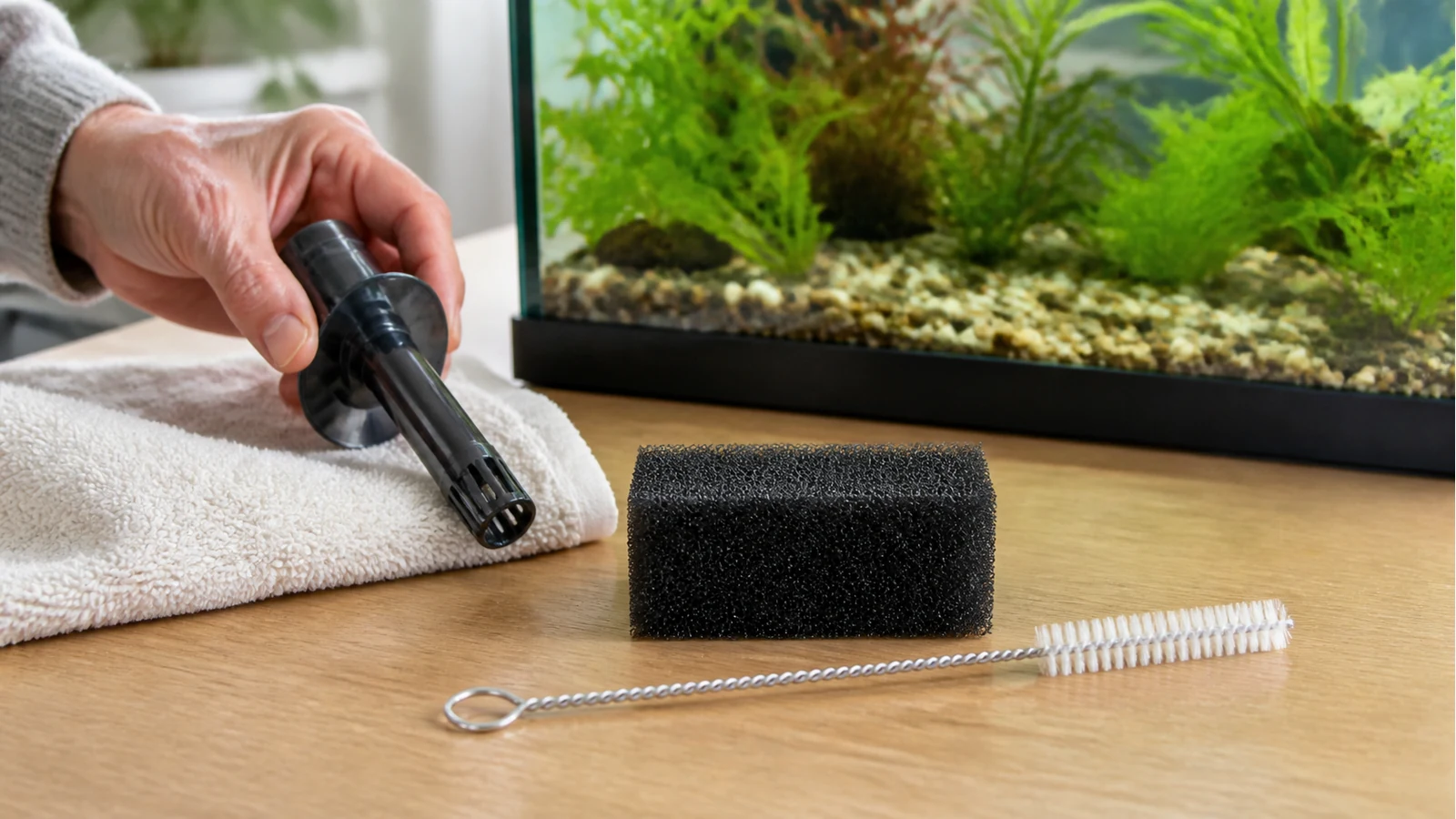
Easy to Clean Aquarium Surface Skimmer UK
Direct answer: an easy-to-clean surface skimmer is one you can remove, rinse, brush and reinstall without guessing the waterline every time. The important parts are not glamorous: accessible sponge, visible intake, reachable impeller area, stable suction cups, a flow control you can use from the front, and replacement sponges that match the unit.
Cleaning matters because surface skimmers work where debris gathers. Film, plant fragments, dust and fine food residues all meet the intake. Category FAQs such as the Fluval UK surface skimmer FAQ point to recurring maintenance themes: reduced output can come from debris or impeller cleaning needs, and sponge cleaning frequency depends on how much surface material accumulates. Different products vary, but the maintenance logic is shared.
What makes a skimmer hard to clean
A skimmer becomes hard work when the sponge is buried behind tiny clips, the intake has narrow slots you cannot brush, the impeller area needs awkward force, or the suction cups lose position every time you touch the unit. It is also hard to live with if the waterline setting is not repeatable. A product can be powerful and still be a poor fit for someone who wants a calm weekly routine.
If eyesight, grip strength or patience are constraints, evaluate the cleaning path before you evaluate the marketing copy. Can you see the flow dial? Can you remove the sponge without dropping parts into the cabinet? Can a supplied brush reach the likely blockage points? Can you reinstall the bracket at the same height? These are human questions, not technical luxuries.
Maintenance-first buying checklist
- Sponge access: you should be able to remove and rinse it without dismantling the whole aquarium corner.
- Brush path: there should be a practical way to clean the intake and small channels.
- Impeller access: if the pump output drops, the part most likely to need cleaning should not be mysterious.
- Waterline repeatability: height settings or clear physical reference points reduce post-cleaning gurgle.
- Flow control: the control should be reachable after installation.
- Spare parts: replacement sponge availability is more useful than a one-off perfect unboxing.
- Electrical routine: you must be able to switch off and unplug before maintenance without reaching behind wet clutter.
Arrival test during the return window
On day one, install the skimmer and take a photo of its height. On day two, remove and reinstall the sponge with dry hands and the unit unplugged. On day four or five, repeat after normal use. If you cannot do that comfortably, the product is not easy for you, even if another hobbyist likes it. For UK online orders, GOV.UK guidance on online returns explains the baseline cancellation and refund framework; check the retailer's own terms as well.
Do not wait until the sponge is clogged to discover that cleaning is awkward. A surface skimmer that is not cleaned will eventually become noisy or weak. Easy maintenance is part of performance and daily confidence.
Use a simple pass-or-fail test rather than a vague impression. After the first clean, the unit should return to the same waterline, restart without repeated tapping, and produce similar surface movement at the previous flow setting. You should know where the sponge, brush and any small removable pieces are stored. Time the job once, because a five-minute rinse and a twenty-minute rebuild feel very different over a year. If you need a second person every time, write that down honestly. Help from family is fine, but a product sold as easy for your routine should not depend on emergency assistance for normal cleaning.
Electrical safety around cleaning
Cleaning puts hands, water and powered equipment in the same small area. The HSE advice on checking electrical equipment advises checking electrical equipment condition and switching off before checks where appropriate. In aquarium language: unplug before maintenance, keep plugs dry, do not use taped or damaged cables, and avoid trailing wires that can be pulled while you are holding wet parts.
Who should not buy for easy cleaning alone
Do not buy if a simple filter outlet adjustment solves the film. Do not buy if the tank is outside the product's size range. Do not buy if you need certified accessibility features, large-print instructions or quantified grip-force data; those are not supplied facts here. Do not buy if replacement sponges are unavailable or compatibility is uncertain. Cheaper alternatives can be enough when the surface film is occasional: reduce oily foods, remove floating debris after trimming, adjust the outlet slightly, or clean the existing intake more regularly. A new skimmer is justified when those steps fail and the maintenance path is genuinely easier than your current workaround.
Stop conditions
Stop using a skimmer if the cable or plug is damaged, the housing cracks, output drops even after proper cleaning, the sponge deforms so it no longer seats correctly, or livestock is repeatedly drawn to the intake. Stop reusing a sponge that is falling apart, smells bad after rinsing, blocks flow quickly, or no longer returns to shape.
Conditional product fit
AquarSurfa is relevant to this query when the reader has a 100-150 litre tank and values the supplied maintenance features: internal sponge, included needle brush, top flow dial and three-level bracket. Those features support a simpler routine, but the buyer still needs to test whether the parts are comfortable in their own hands. Easy means repeatable for the person doing the cleaning.
When this check is not enough
Do not use a surface skimmer as a standalone fix for poor filtration, unsafe livestock behaviour, ammonia, nitrite, disease or unsuitable tank setup.
When to stop and reassess
Stop and reassess when fish gasp at the surface, livestock could be pulled into the intake, electrical equipment is damaged, water level is unstable, or the tank problem affects animal welfare.